
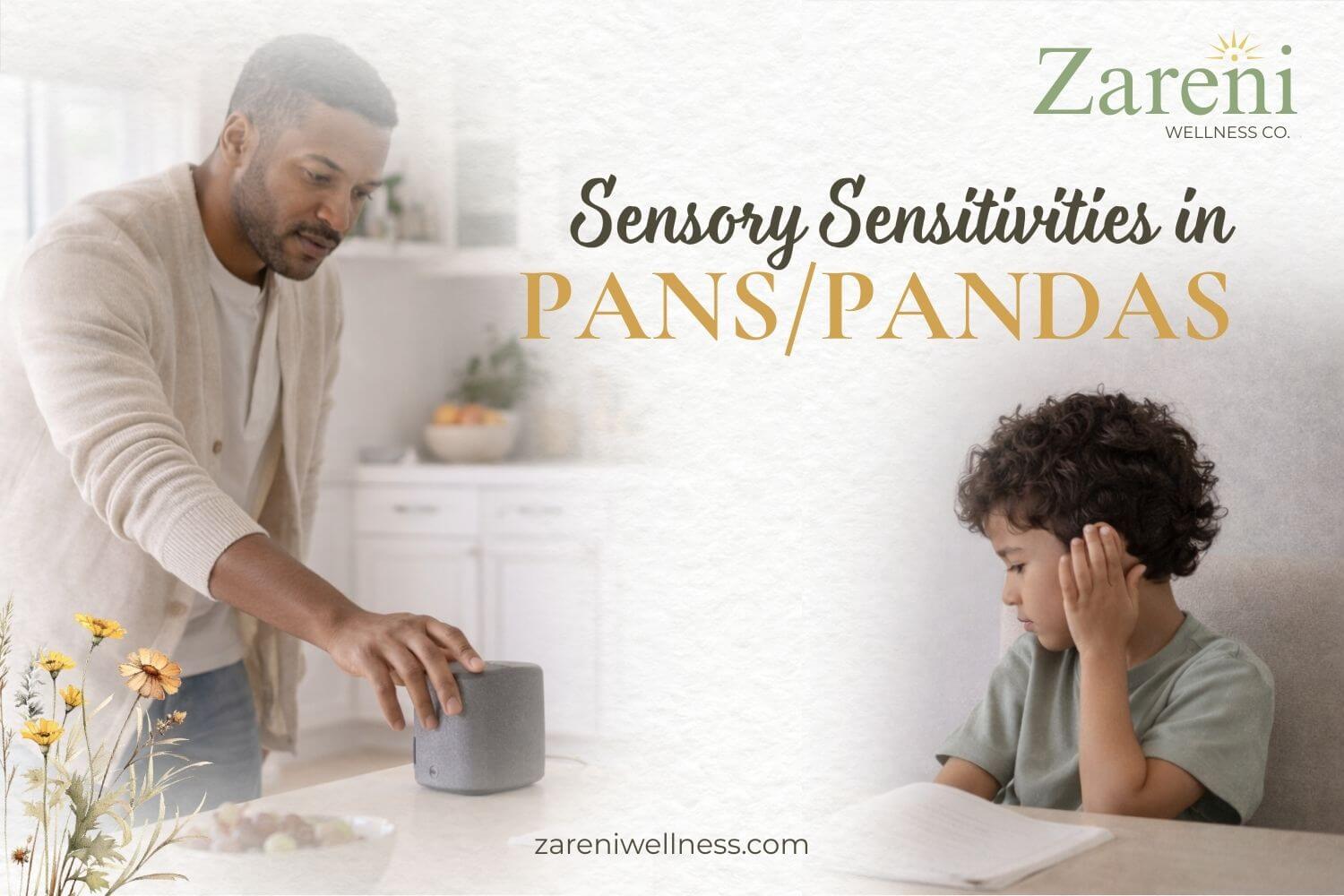
You’re sitting with your child one afternoon after school and you notice an unusual blinking. You don’t think much about it, but then it happens again and again. After dinner, homework becomes a chore, and the usual noise of the house suddenly becomes overwhelming. Your child can’t sit in the same room anymore. Something is wrong, but you’re not sure what. One of the most confusing parts for many parents is how quickly sensory sensitivities in children with PANS PANDAS can appear.
Understanding this concept can help you respond with more confidence. A child who never minded noise may suddenly cover their ears. A child who loved bright lights or bustling environments may now find them unbearable. Clothing textures, food textures, smells, and even subtle changes in the environment may start to feel “too much.”
Parents describe these sensory shifts to me as some of the most dramatic and heartbreaking changes they witness:
“I don’t recognize how sensitive everything feels for them now.” “I didn’t realize this wasn’t behavioral. They’re truly overwhelmed.” “It’s like the world suddenly got louder and brighter.” “They used to love going places, and now everything feels too big.”
These sensory reactions are not misbehavior or defiance. They’re nervous system signals. And I want to encourage you with this. You didn’t lose your child! We can get them back!
Let’s explore why sensory sensitivities in PANS/PANDAS happen, what they look like in everyday life, and how you can respond with clarity and compassion.
Why Sensory Sensitivities Are So Common in PANS PANDAS
Sensory processing depends on a balanced nervous system, one that can take in information, sort it, filter it, and decide what matters. During PANS or PANDAS, the nervous system becomes more reactive because of inflammation, immune activation, gut imbalance, or stress. This makes sensory input feel louder, sharper, and harder to manage.
Parents often tell me their child seems “raw,” “on edge,” or “flooded” by experiences that used to be easy. In my practice as a Board Certified Holistic Health Practitioner, I see these sensory shifts show up as one of the earliest signs that the nervous system is under strain.
These sensory sensitivities in PANS PANDAS children can appear suddenly, slowly, or during flares. They also tend to come and go depending on how the child’s system is functioning day to day.
What Sensory Overload Looks Like in PANS PANDAS
Sensory overload can show up differently for each child, but there are common patterns many parents recognize. Here are the most frequent sensory categories affected.
Noise Sensitivity
Sudden sensitivity to sound is one of the earliest and most intense signs. Children may cover their ears, ask for quieter environments, cry or panic in noisy spaces, struggle with crowds, feel overwhelmed by unexpected sounds, or suddenly fear appliances like toilets or hand dryers. Even everyday household noise can feel startling. This can be very alarming as a parent, I know. But take heart, there is a solution!
Light Sensitivity
Parents often notice squinting in bright rooms, discomfort in sunlight, avoiding fluorescent lights, needing dimmer lighting at home, or headaches after bright or busy visual environments. Light sensitivity tends to rise during flares or stress. It’s a very common symptom of PANS/PANDAS.
Clothing and Texture Sensitivity
Changes in tactile comfort can appear abruptly. Children may refuse certain fabrics, complain about seams or tags (aren’t you thankful for tagless clothes?!), pull on or adjust clothing repeatedly, resist socks, shoes, or jackets, or avoid certain blankets or bedding. It might seem like your child is being stubborn, but it’s really not. It’s sensory distress at its finest.
Sensory Overload in Public Spaces
Parents often describe overwhelm in grocery stores, classrooms, church or group settings, playgrounds, busy restaurants, and loud public areas. What used to be a simple outing may suddenly feel impossible. This makes it hard on you and the rest of the family.
How Sensory and Emotional Symptoms Connect in PANS PANDAS
Sensory changes rarely exist on their own. They’re closely tied to how a child feels emotionally, physically, and internally. When sensory input becomes harder to filter, everyday experiences begin to feel bigger, louder, and more demanding than they used to. I find that parents often notice emotional shifts rising right alongside sensory ones.
Understanding this connection can help you respond with more confidence and less fear. Hopefully it will help you respond with patience and understanding too.
Many parents assume sensory issues are “just sensory.” But for children with PANS or PANDAS, the emotional system is often deeply involved. When the nervous system is overwhelmed by immune stress, gut inflammation, poor sleep, overstimulation, or an incoming flare, the brain’s ability to filter sensory input becomes limited. This overload creates emotional reactions that may look behavioral but are actually driven by distress.
Common emotional reactions to sensory overwhelm include tears or shutdown, panic or fear, irritability, refusing certain environments, anger that seems sudden, hiding or withdrawing, clinging to a parent, or asking to leave immediately. I often hear parents say, “It’s like they can’t turn the world down.” Or, “Everything feels like too much at once.”
Why PANS PANDAS Sensory Sensitivities Rise and Fall
Sensory overload often follows the same wave-like pattern as other PANS/PANDAS symptoms. Understanding what makes sensitivities increase or decrease can help you feel less blindsided when shifts happen.
Sensitivities may increase when your child is fighting an illness, sleep has been disrupted, the immune system is activated, gut issues flare, stress increases, inflammation rises, or a trigger is present (seasonal, viral, emotional, or environmental).
On the other hand, sensitivities may decrease when inflammation settles, sleep improves, your child feels safer and calmer, routines stabilize, stress lessens, or the gut is functioning more smoothly. Symptoms may change day by day, or even hour by hour. Parents sometimes describe it as “living on shifting ground.”
How Sensory Sensitivities Shape Daily Life With PANS PANDAS
These sensory changes can affect nearly every part of a child’s day, not because they’re avoiding experiences, but because the experiences truly feel overwhelming.
Mornings Become More Challenging
Parents often notice clothing battles, trouble transitioning out of bed, sensitivity to bright morning light, or even overwhelm during breakfast or school prep time. If this is the case, make sure to put simple systems in place so your child can know what to expect.
Public Outings Become Harder
Activities like grocery stores, restaurants, or church can feel overstimulating. Anytime there is a crowd, it can be very overwhelming for your child. As a simple exercise to understand what they’re feeling, I challenge you to put headphones on and turn up the volume on a song and then try to concentrate on something important. It’s nearly impossible. This is how your child is feeling every day.
School May Feel Exhausting
A buzzing classroom, busy hallways, and crowded lunchrooms can quickly drain your child’s reserves. It’s way too much stimulation for your child to try and concentrate, and so everything becomes frustrating and overwhelming.
Even Home Can Feel Like “Too Much”
When their capacity shrinks, noise from siblings, the TV, or the dishwasher can feel unbearable. These shifts can lead to emotional and behavioral patterns that make perfect sense once you recognize the sensory layer behind them. I hope you’re seeing the pattern emerge. Your child needs calm surroundings that don’t overtax an already taxed brain.
The Three Types of Sensory Overwhelm in PANS PANDAS
In my practice I have found that parents typically notice three patterns. Each one has its own emotional “texture.”
Fight Overwhelm. The child reacts with anger, irritability, yelling, resistance, or pushing away from stimulation.
Flight Overwhelm. The child responds with fear, panic, hiding, shutting down conversation, or wanting to leave immediately.
Freeze Overwhelm. The child becomes still, internally overwhelmed, nonverbal or quiet, withdrawn, or unable to think through simple tasks.
Recognizing which pattern your child is experiencing helps you support them more calmly and effectively. Do you see these patterns in your child? Sometimes a child will exhibit all three. That’s perfectly normal for a PANS/PANDAS child.
Gentle Sensory Supports for Everyday PANS PANDAS Life
Don’t panic. That’s the first thing I want you to grasp. When you panic, your child becomes even more emotionally dysregulated because their nervous system often plays off of yours.
When sensory sensitivities start appearing, parents often feel unsure where to begin. You may find yourself tiptoeing around certain triggers or rearranging plans without warning. It feels like you’re avoiding life, but you’re simply trying to help your child stay regulated enough to get through the day. And that is noble. You’re doing great protecting your child. But I also recognize that you might feel like your life is over. That’s not true. Stick with me and I’ll tell you why.
The goal isn’t to eliminate every trigger, but rather to give your child more comfort, predictability, and support so their system can settle enough to function without overwhelm.
Create Softer, Calmer Spaces at Home
Simple adjustments make a noticeable difference, especially during flares. Try warm, indirect lighting, designated quiet corners, soft blankets or pillows or beanbags, keeping loud appliances off when possible, and using white noise to soften background sounds. A quiet space gives the nervous system room to settle.
Use Sensory Tools Without Making Them a Big Deal
Many children benefit from noise-reducing headphones, hats or hoodies, sunglasses, soft clothing, weighted or compression items like a weighted blanket, fidget tools, warm baths or showers, and gentle rocking or movement. Don’t worry about these becoming a crutch. You’re simply offering comforting tools so the nervous system can calm down.
Adjust Expectations During Flare Days
Remember that when the sensory load is high, your child’s capacity is low. On those days, helpful shifts include shorter outings, fewer errands, staying close to home, more rest, quiet play, and reducing demands. Don’t worry about spoiling your child right now. You want to do everything you can to help the nervous system calm down.
Support the Nervous System Through Connection
Sensory overload is not just physical, it’s also emotional. Staying close and steady while also keeping your calm helps your child feel safe in overwhelming moments. Try sitting next to them, speaking calmly and softly, slowing your own pace, offering steady physical presence, validating their feelings without minimizing them, and helping them take slow breaths if they’re open to it. Your grounded presence is often the fastest way to help them settle. And it can help your nervous system calm down as well.
Supportive Tools for High Sensory Days
I love to recommend the Calm Patch on high sensory days. It’s a gentle, easy option when your child is navigating:
- Sound or light sensitivity
- Overwhelm in public spaces
- Big emotional reactions to sensory input
- Difficulty settling after overstimulation
- Irritability tied to overload
When Professional Support May Be Helpful for PANS PANDAS Sensory Issues
If sensory overwhelm persists for long periods, cycles with emotional changes, becomes unpredictable, affects school, home life, or relationships, or rises alongside other symptoms, it may be time to explore the bigger picture.
A chronic consult helps you understand patterns, identify flare triggers, and support the nervous system, immune system, and gut more cohesively. As a Board Certified Holistic Health Practitioner and bio resonance specialist, I use gentle, non-invasive assessment tools to help us see what your child’s body is telling us, even when the surface looks calm.
I would be honored to walk this journey with you. I have seen so many families move from confusion and fear to clarity and real progress. It would be my honor to help your family get there too.
When Sensory Changes Start to Make Sense
If sensory input suddenly feels overwhelming for your child, it is not a reflection of poor coping or behavior. These reactions can come and go, shift in intensity, or look different from day to day, which is confusing for parents and exhausting for children. What matters most is noticing the pattern and responding with steadiness rather than urgency.
With the right kind of support, the nervous system can soften and recalibrate. Your child can come back to you. It is possible! These sensory shifts are a normal part of the PANS/PANDAS experience, and with gentle guidance, they can improve.
Take heart. You are not alone in this, and I’d be honored to be a part of your journey.
Disclaimer:
The information provided in this article is for educational purposes only and is not intended to diagnose, treat, cure, or prevent any disease. This content does not constitute medical advice and should not replace consultation with a qualified healthcare provider. Always consult with your child’s pediatrician or healthcare professional before making any changes to their care, treatment, or supplementation. Individual results may vary.